How to Make Money in UGC: 5 Ways to Get Paid as a Creator
UGC creators get paid because brands need videos that look like they came from a real customer, and they run those videos as ads. You don't need a big following. You need a few good videos, a brand that fits, and a deal where you understand how and when you get paid.
This guide explains the main ways UGC creators earn, how the maths works with a worked example, and a realistic path from zero to your first income. There are no income promises here. What you earn depends on the brand, the deal and how well your videos perform.
How do UGC creators actually get paid?
A brand pays for UGC because the video can work as an ad. That is why the money isn't tied to your follower count. The brand's question is simple: does this video make people want to buy? That means the same few skills, a strong hook, a clear benefit and a natural delivery, matter more than a big audience.
There are five common ways the payment is set up. Most creators end up using more than one.
1. Flat fee per video
The brand pays a set price for each finished video, usually agreed before you film. It is predictable, which is why many creators start here. The trade-off is that your pay stays the same even if the video becomes the brand's best-performing ad.
Things to settle before you film: how many revisions are included, how long the brand can run the video as an ad (usage rights), and when you're paid.
2. Commission on sales
With commission, the brand runs your video as an ad and pays you a share of the sales it drives. You take more risk, because a video that doesn't sell earns little, but you also keep earning as long as the brand keeps running it. This is the model Creator Dividend is built around: each sale an ad drives is matched back to the creator, and the creator earns the commission the brand set.
A commission plan can be an amount per sale, a percentage of the sales value (GMV), a percentage of the ad spend, or a mix. How commission is worked out in the help centre explains each one.
A worked example
Say a brand pays S$5 per sale plus 10% of GMV, and the product costs S$39. One sale at full price earns about S$5 + S$3.90 = S$8.90. The real figure moves with discounts, refunds and orders with several items, so treat it as an estimate. On Creator Dividend, a brand with its shop connected shows an estimated "You earn ~S$X per sale" under each product before you apply.
3. A mix: a small fee plus commission
Some deals pay a smaller flat fee for the video and add commission on top. It gives you something for the work up front and a reason to make the video good. If a brand offers this, check how sales are counted and whether you can see them.
4. Bonuses and tiers
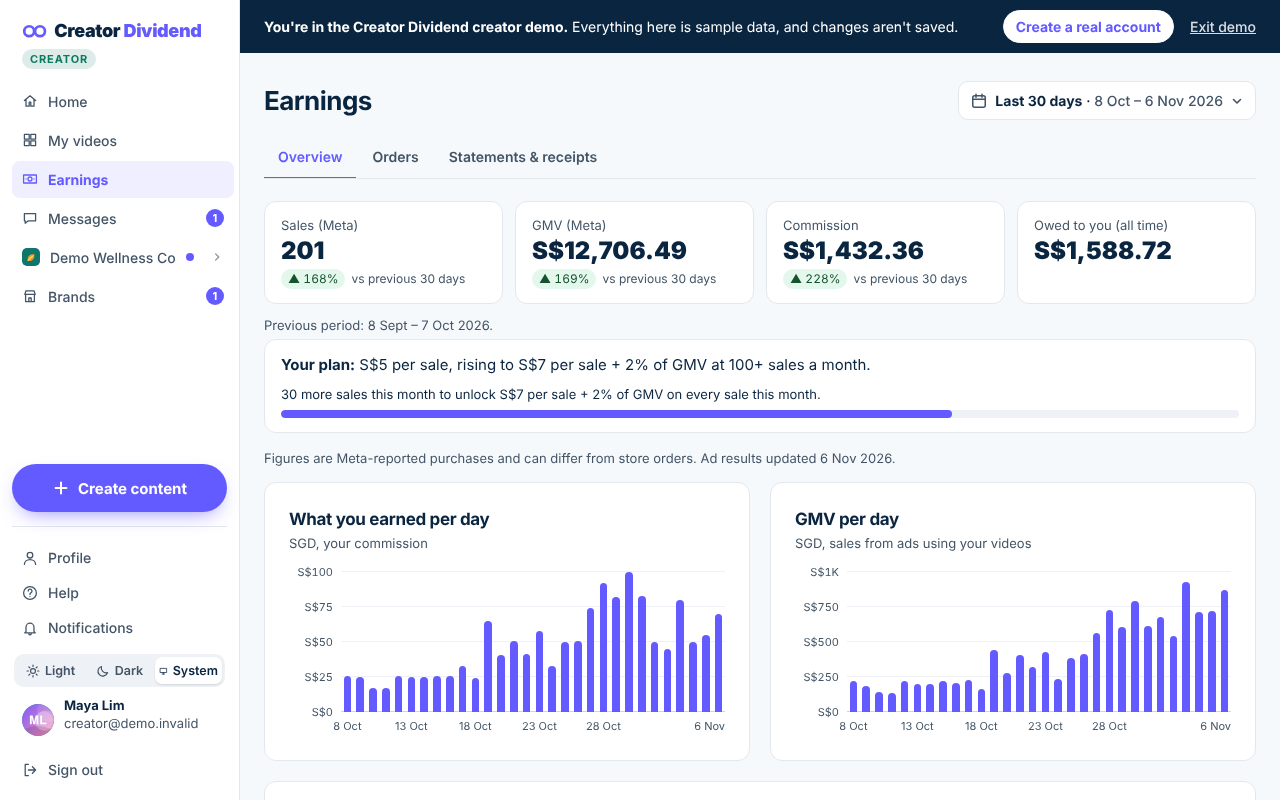
Some plans pay more when a month goes well. A tier raises your rate once you reach a number of sales: for example, S$5 a sale, or S$7 a sale plus a share of GMV once you reach 100 sales in a month, with the higher rate applying to every sale that month. A milestone bonus pays a fixed amount every so many sales. You can see how far you have to go on your Earnings page, as in the screenshot above, where a progress bar shows the sales left to the next tier. See how tiers work and what a milestone bonus is.
5. Repeat work and more brands
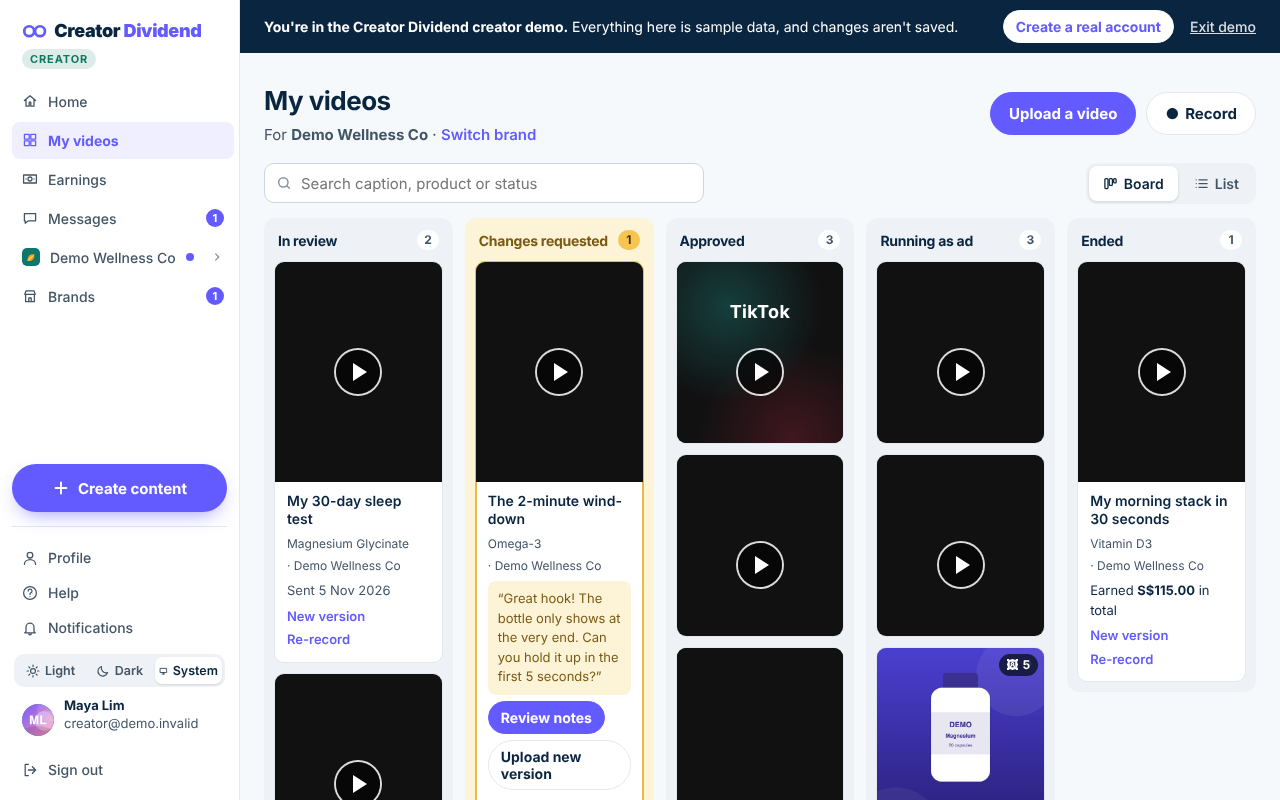
Brands refresh their ads constantly, so a brand that likes your first video usually wants more. Sending new videos regularly, with different hooks for the same product, keeps you in the mix. Working with several brands in different niches also spreads the risk, since no single brand's ad budget decides your month.
What affects how much you earn?
- The product and price. A percentage of a higher-priced product pays more per sale than the same percentage of a cheap one.
- Your hook. If people scroll past in two seconds, nothing else matters. Start the video with the problem or a bold line, not "Hi guys", and show the product early.
- How many videos you send. More videos, and more variations of a hook, give the brand more to test.
- How long the brand runs the ad. With commission, a video that keeps working keeps paying.
- The commission plan. Compare plans before you apply, not after you film.
Nobody can promise you a figure, and it's worth being wary of anyone who does.
How do you track what you've earned?
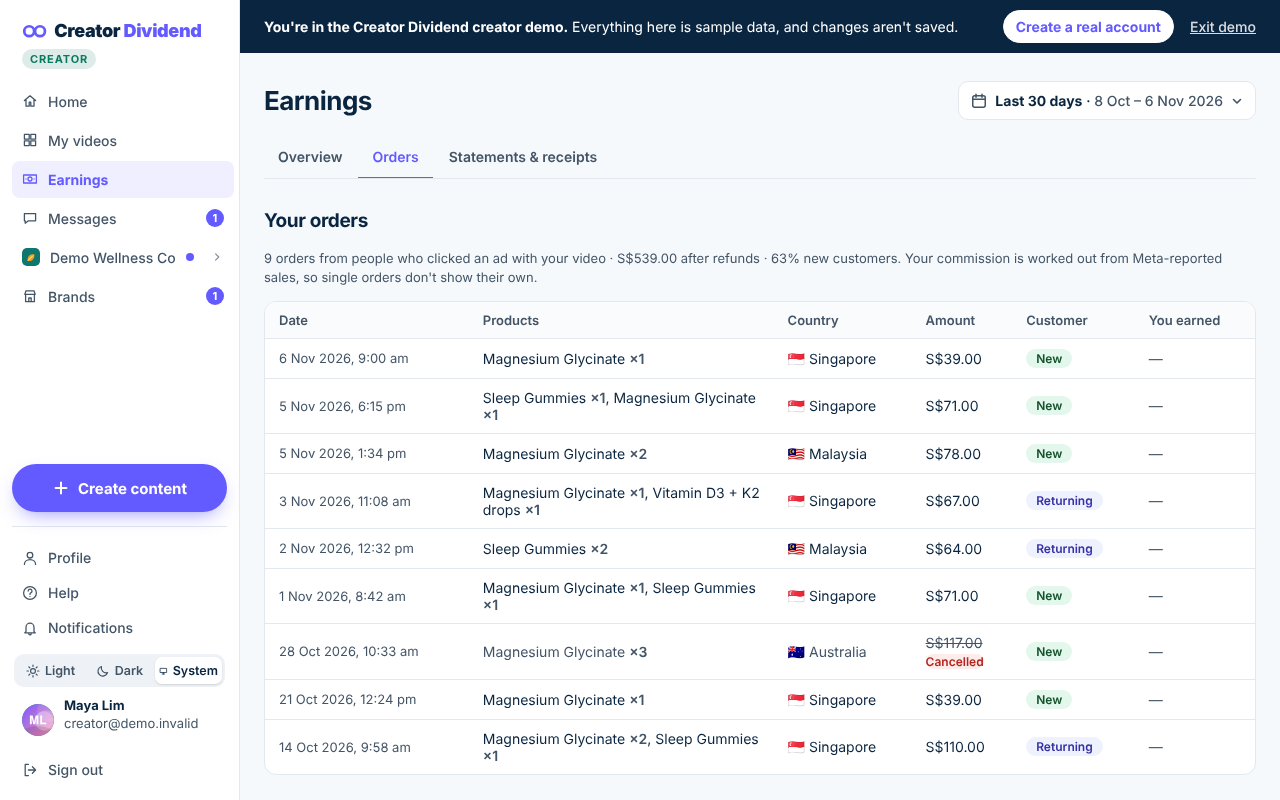
Whichever model you choose, you should be able to see the numbers. With commission, ask the brand how sales are matched to you. On Creator Dividend, the Earnings page shows sales, GMV and commission by day, and an Orders tab lists the store orders from people who clicked an ad with your video, without showing customer details. Refunded or cancelled orders are struck through.
How and when do you get paid?
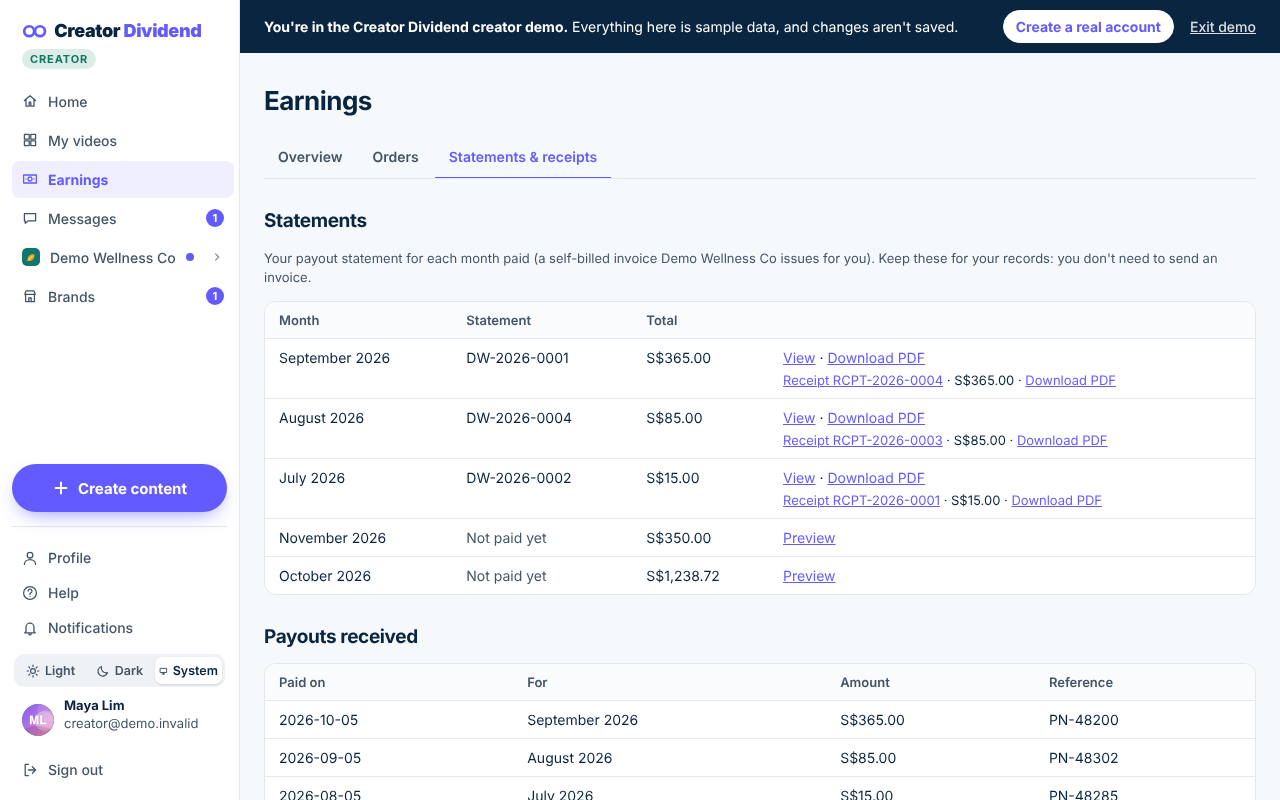
Ask this before you agree to anything. On Creator Dividend, brands pay creators monthly by PayNow, bank transfer or PayPal. Each month you're paid has a statement showing your commission by video, and a receipt shows the payment reference. You don't have to send invoices: the brand issues a payout statement for you, and the help centre explains how to add your payout details.
Keep the paperwork in order
UGC income is income. Keep your statements and receipts, and look up what applies where you live. In Singapore, the Inland Revenue Authority of Singapore (IRAS) is the place to check how self-employed income is treated. If a post is paid or you get free product, follow the disclosure rules where you live, such as the FTC's endorsement guidance in the US. This is general information, not tax advice.
A realistic path to your first UGC income
- Week 1: build two or three sample videos for products you already own. Hook, product in hand, one benefit, one call to action.
- Week 1: create your free account and fill in your profile with your niche and handles.
- Week 2: apply to brands that fit your niche, and read the commission plan before you do. The guide to finding brands to work with for UGC has more places to look.
- Week 2 onward: send a video, read the notes, send a better version. Brands often ask for changes, and a quick, polite revision is how you become a creator they rely on.
- Month 2: film more hooks for what's working and ask the brand whether it wants more.
Creator Dividend is in a closed beta for brands, so the list of brands is still growing. Creators can sign up free and apply as brands join.
Frequently asked questions
How do UGC creators make money?
UGC creators are paid by brands that run their videos as ads. The most common set-ups are a flat fee per video, commission on the sales a video drives, a mix of the two, and bonuses for reaching sales targets. Many creators combine several.
Do I need followers to make money in UGC?
No. Brands usually run UGC as ads rather than posting it on your account, so they care whether your video grabs attention and sells, not how big your audience is.
Is UGC better paid as a flat fee or commission?
A flat fee is predictable and paid for the work you do. Commission carries more risk but can keep paying while the brand runs your video as an ad. Which is better depends on the brand, the product and how comfortable you are with uncertainty.
How much can a UGC creator earn?
It varies a lot and nobody can guarantee a figure. What you earn depends on the deal, the product, how your videos perform and how long the brand keeps running them.
How do I get paid on Creator Dividend?
Brands pay creators monthly by PayNow, bank transfer or PayPal. Each month you are paid comes with a statement showing your commission by video, and a receipt with the payment reference. You don't need to send invoices.